Kittens: Tilt Their Heads?

Yuna
| 10-09-2026
 · Animal Team
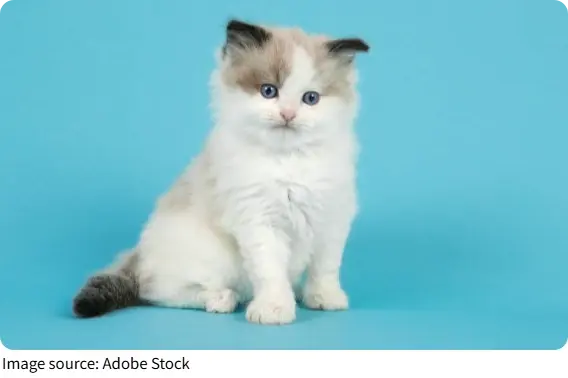
A kitten suddenly tilting its head after hearing a strange sound or noticing a new object can be one of the most charming behaviors to watch. The little movement often looks like pure curiosity, but there is more happening than simply being cute.
For kittens, a new sight, sound, or movement can trigger several natural responses that help them understand what is happening around them.
Curiosity Plays a Major Role
Kittens are naturally curious, especially during their early stages of learning. Everyday surroundings can provide countless new experiences, from a crinkling paper bag to a moving toy or an unfamiliar household sound.
When something catches a kitten's attention, tilting the head may be part of its attempt to focus on the stimulus. The movement can help the kitten pay closer attention while deciding whether the object or sound is interesting, harmless, or worth investigating.
This is particularly noticeable when a kitten encounters something for the first time. A new toy may receive a head tilt before the kitten approaches, sniffs, paws at it, or moves away.
They Are Processing Sound
Sound can be especially interesting to young cats. Kittens have sensitive hearing and can notice sounds that may seem ordinary to people. A faint rustle, unfamiliar electronic noise, or movement from another room can quickly attract attention.
A head tilt may occur as the kitten changes the position of its ears and head while trying to locate where a sound is coming from. Cats can move their ears independently, helping them gather information about sounds from different directions. The tilt itself does not necessarily mean the kitten understands the source immediately. Instead, it can be one small part of the process of figuring out where the sound originates.
New Sights Can Trigger the Same Reaction
Not every head tilt is caused by sound. A kitten may also tilt its head when watching something visually unusual. For example, a feather toy moving in an unfamiliar pattern, a reflection of light on the wall, or a new object placed in a familiar room can create enough visual interest to produce the behavior. The kitten may pause, tilt its head, and carefully watch before deciding what to do next.
Young cats are still building their understanding of the environment. Observing unfamiliar objects gives them opportunities to learn about movement, distance, texture, and how different things behave.
Learning Through Observation
Kittens spend much of their early development learning how their surroundings work. Watching and listening are important parts of that process. A kitten may observe an object several times before becoming comfortable enough to approach it. During this period, small changes in posture—including a head tilt—can accompany intense attention.
The behavior can also be followed by other signs of curiosity, such as forward-facing ears, focused eyes, cautious steps, or a quick paw movement. Together, these actions can show that the kitten is actively responding to something it finds unusual or interesting.
When a Head Tilt Is Normal
An occasional head tilt that happens briefly while a kitten is watching or listening to something is generally not unusual. If the kitten quickly returns to normal behavior, walks steadily, plays normally, and shows no other concerning signs, the movement may simply be part of its response to a new experience.
The important factor is the pattern of the behavior. A temporary tilt associated with curiosity is different from a persistent or repeated tilt that appears without an obvious trigger.
When to Pay Closer Attention
A kitten that keeps its head tilted for long periods, develops balance problems, walks in circles, seems unusually confused, or shows other changes in behavior should be evaluated by a veterinarian. Persistent head tilting can sometimes be associated with an ear or balance-related problem rather than ordinary curiosity.
Pet owners should also pay attention to whether the kitten appears uncomfortable or has difficulty moving normally. These additional signs provide useful information for a veterinary professional.
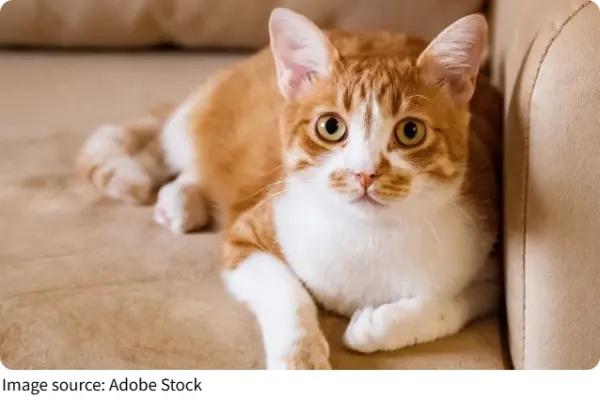
A kitten's head tilt is often a fascinating glimpse into how it responds to the world. The key is to watch the behavior in context. A brief tilt during an interesting new experience can be perfectly ordinary, while a persistent tilt or one accompanied by other unusual signs deserves professional attention.