Elephant Memory Secrets

Arjun Mehta
| 09-08-2026
 · Animal Team
Elephants are known for their remarkable memory, but their ability goes far beyond simply remembering familiar places.
Across wide natural landscapes, they can recognize family members, recall useful water sources, follow familiar routes, and learn from experiences passed down through generations.
Their memory works as an important part of everyday life, helping them understand their surroundings, stay connected with their family, and respond to changing conditions.
A Powerful Brain
An elephant has one of the largest brains among land animals, weighing around 5 kilograms. Brain size alone does not explain intelligence, but its complex structure supports learning, memory, emotions, and spatial awareness.
Spatial memory is especially useful for elephants. It helps them remember where certain places are and how different areas connect. A familiar route, a seasonal feeding area, or a distant water source can become valuable information that remains useful long after the first visit.
Remembering Water
During dry seasons, water may be difficult to find. Elephants can travel long distances while searching for it, and experienced members of a family group may remember useful locations from earlier journeys.
Older females are especially important because they often have years of experience with the local landscape. They may remember routes, seasonal changes, and places where resources have been available before.
For us, it would be like remembering a hidden spring after years away. An elephant does not rely on one clue alone. It can combine memory with smell, sound, and visible features of the landscape.
Recognizing Family
Memory also plays a major role in elephant society. Family groups can include several related individuals, so recognizing one another helps keep the group organized.
Elephants can identify familiar individuals through calls and scents. A particular sound can help an animal recognize who is nearby, while scent provides another useful clue.
We can understand this by thinking about a familiar voice. Even without seeing someone, we may know who is speaking. Elephants appear to have a similarly useful ability, supported by a much more complex social system.
Learning From Elders
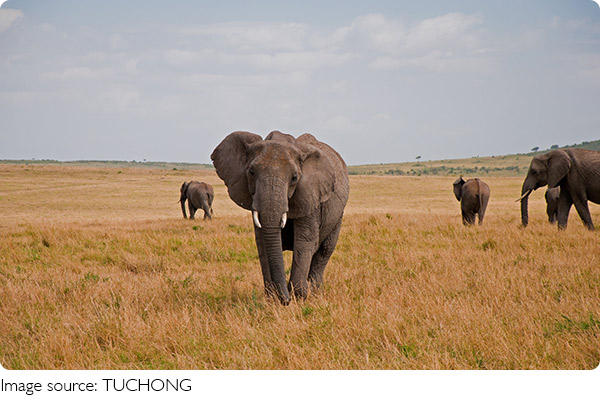
Young elephants learn by watching experienced members of the group. They may follow older animals along familiar routes and gradually build their own knowledge of the surrounding landscape.
This learning can include where to search for food, where water may be available, and how to respond to unfamiliar situations. With repeated journeys, younger animals gain experience and become more independent.
In this way, knowledge can pass from one generation to another. The experience of older elephants can therefore benefit the entire family.
Memory And Emotion
Elephant behavior also suggests that memory can be connected with emotions. When an elephant encounters the remains of another elephant, it may stop, investigate, touch them with its trunk, and remain nearby for some time.
Scientists are careful when interpreting such behavior, so we should not assume that elephants experience emotions exactly as humans do. Still, these reactions show that important events can lead to lasting responses.
Their behavior gives us another reason to look at elephant intelligence as more than simple learning. Memory, recognition, and emotion may work together in complex ways.
Memory Supports Survival
Remembering the past can be especially useful when conditions change. Food and water may appear in different places during different seasons, while familiar routes can provide safer and more efficient ways to travel.
An experienced elephant may remember places that younger animals have not yet discovered. When the group reaches a difficult period, that knowledge can influence where they go next.
This shows why memory is not simply an interesting mental skill. It can directly affect daily survival.
Understanding The Limits
Although elephant memory is impressive, it does not mean they remember every detail perfectly. Like other intelligent animals, elephants have limits.
They appear particularly skilled at remembering useful information involving locations, social relationships, and important experiences. Information with little practical value may not receive the same attention.
Memory can also become less clear when it is not reinforced. This makes the popular idea of an elephant remembering everything too simple. Their real ability is more interesting because it is connected to practical needs.
Why It Matters
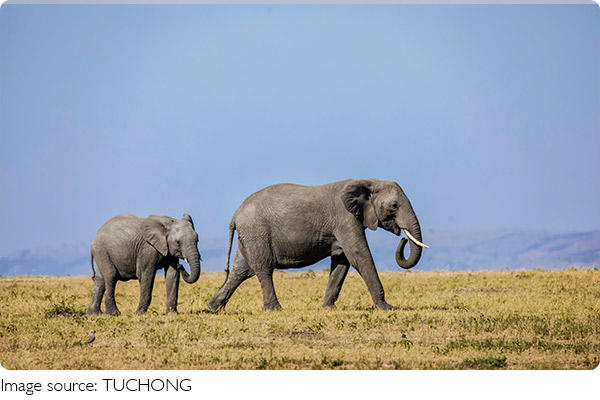
Understanding elephant memory can help us better appreciate their natural behavior. If elephants depend on familiar routes, water sources, and social knowledge, changes to their surroundings can affect how they move and live.
Protecting their environment therefore involves more than caring for individual animals. We also need to consider the important places and routes that support their lives.
Lykkers, the next time we hear that elephants have incredible memories, we can think beyond the familiar saying. Their ability to remember water, recognize family, learn from elders, and respond to past experiences shows us how closely memory is tied to survival.
Perhaps that is the most fascinating lesson of all: what an elephant remembers today can help shape where it goes tomorrow. What part of elephant memory surprises you most?
How Good Is an Elephant’s Memory? The Truth Will Shock You!
Video by Turtleshell Telly