Creamy Wabi Living Room

Owen Murphy
| 22-06-2026
 · Lifestyle Team
A creamy living room with woven furniture can feel like a warm latte in a room—soft, calm, and quietly inviting without trying too hard.
This atmosphere aligns naturally with wabi-sabi, a Japanese-inspired aesthetic that emphasizes simplicity, natural materials, craftsmanship, and the beauty of imperfection.
Rather than pursuing a flawless, showroom-like space, this approach embraces texture, subtle variation, and a sense of ease.
If a living room feels overly polished or visually busy, this style introduces a sense of calm and balance, allowing the space to feel more breathable and grounded.
Start with warm cream tones
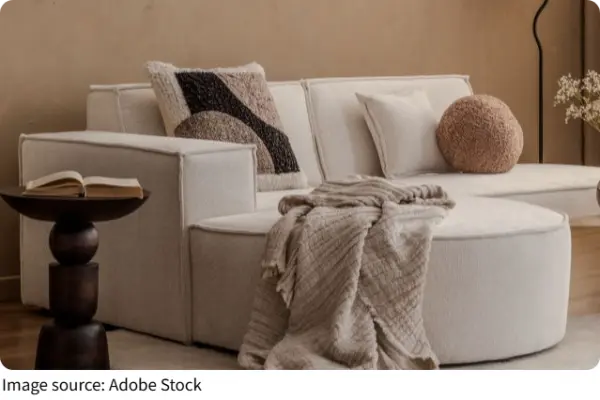
Wabi-sabi interiors favor muted, earthy color palettes rather than sharp or high-contrast tones. Cream-based shades work particularly well in living spaces because they maintain brightness while still feeling soft and grounded.
Tones such as ivory, oatmeal, sand, and off-white create a subtle foundation that allows woven furniture and natural textures to stand out. The intention is not uniformity, but a layered harmony where closely related shades interact in a calm and cohesive way.
Let natural materials define the space
A key principle of wabi-sabi design is the use of natural materials. Woven furniture plays an essential role in achieving this aesthetic.
Rattan chairs, cane-front cabinets, woven stools, and textured wooden surfaces introduce warmth and authenticity. These elements pair well with linen curtains, cotton textiles, clay ceramics, and soft ambient lighting to maintain a balanced and organic atmosphere.
Slight irregularities in weave or grain are not imperfections—they are defining characteristics that add depth and individuality to the space.
Keep the space simple, not empty
Wabi-sabi is closely related to minimalism, but it does not aim for emptiness. Instead, it emphasizes intentionality and restraint.
Furniture should be functional and thoughtfully placed, with adequate negative space between pieces. A woven lounge chair, a low wooden table, a cream-toned sofa, and a few meaningful decorative objects are often sufficient to create a complete environment.
This approach allows each element to be visually and spatially appreciated without overwhelming the room.
Choose pieces with character
Uniform furniture sets can make a space feel overly controlled. Wabi-sabi interiors benefit from individuality and subtle imperfection.
Pieces with handcrafted qualities, aged finishes, or natural irregularities help establish character. Examples include woven seating with slight variation, ceramic lighting with textured surfaces, or wooden tables with visible grain patterns.
Rather than emphasizing perfection, this style values authenticity and a sense of natural evolution over time.
Use texture to create depth
With a restrained color palette, texture becomes the primary design tool for adding visual interest.
Layering materials such as woven fibers, linen fabrics, matte ceramics, raw wood, and natural rugs creates a quiet but rich sense of depth. The contrast should remain soft and balanced rather than visually intense.
This combination allows the space to feel warm and complete while maintaining simplicity.
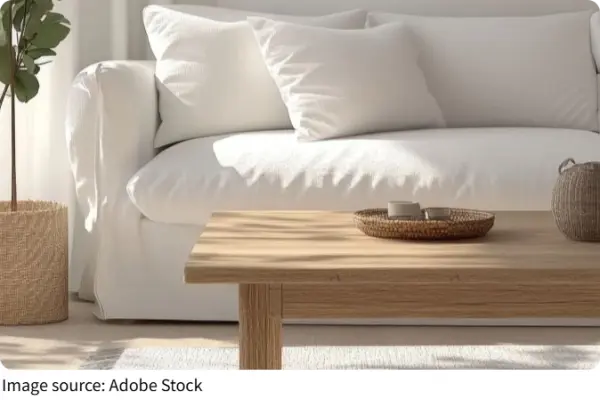
A creamy, woven-texture living room reflects the essence of wabi-sabi by prioritizing simplicity, natural materials, and understated character. Through careful selection of tones, textures, and functional pieces, the space becomes calm, balanced, and visually cohesive.
By focusing on fewer but more intentional elements, and by allowing subtle imperfections to remain visible, the room develops a sense of authenticity and quiet comfort that evolves naturally over time.